The brush and ink convey lofty aspirations; the paintings celebrate the Party’s kindness.
A Documentary on the Joint Exhibition of Chairman Mao Zedong’s Poetry, Calligraphy, and Paintings in Celebration of July 1st
On June 13,2026, to celebrate the Party’s founding anniversary and honor its glorious journey, the joint exhibition of Chairman Mao Zedong’s poetry, calligraphy, and paintings titled “Welcoming July 1st, Praising the Party’s Gratitude” was grandly inaugurated at the Taiyuan Art Museum in Shanxi Province. Mr.Zhao, Chairman of Silk Road Star, was invited to visit the exhibition and, together with numerous senior comrades and colleagues, revisited the revolutionary epic amidst the fragrance of ink and vibrant artworks, reflecting on the Party’s original aspirations and mission.
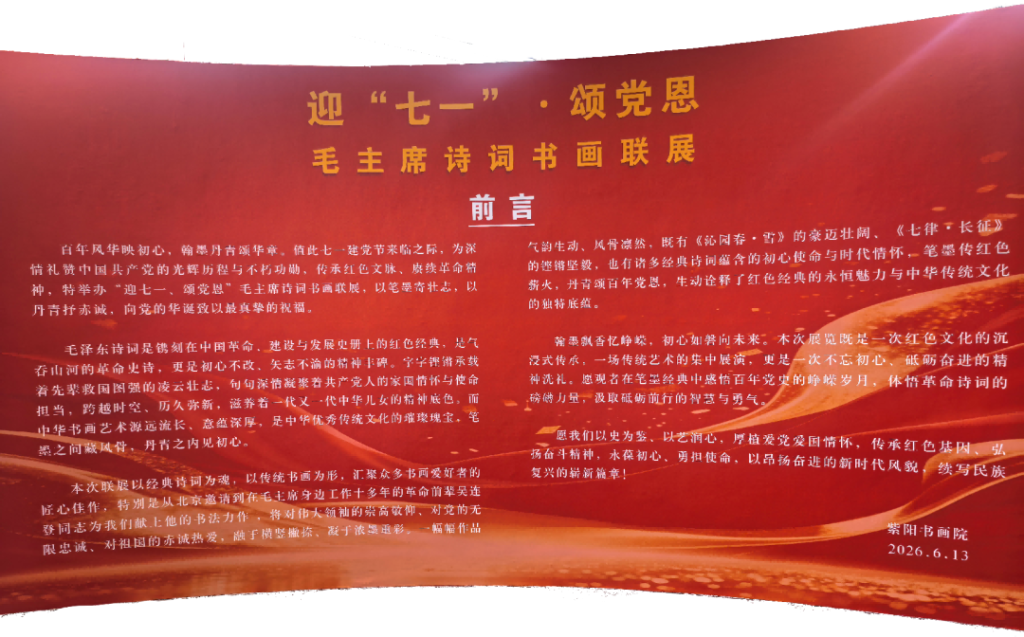
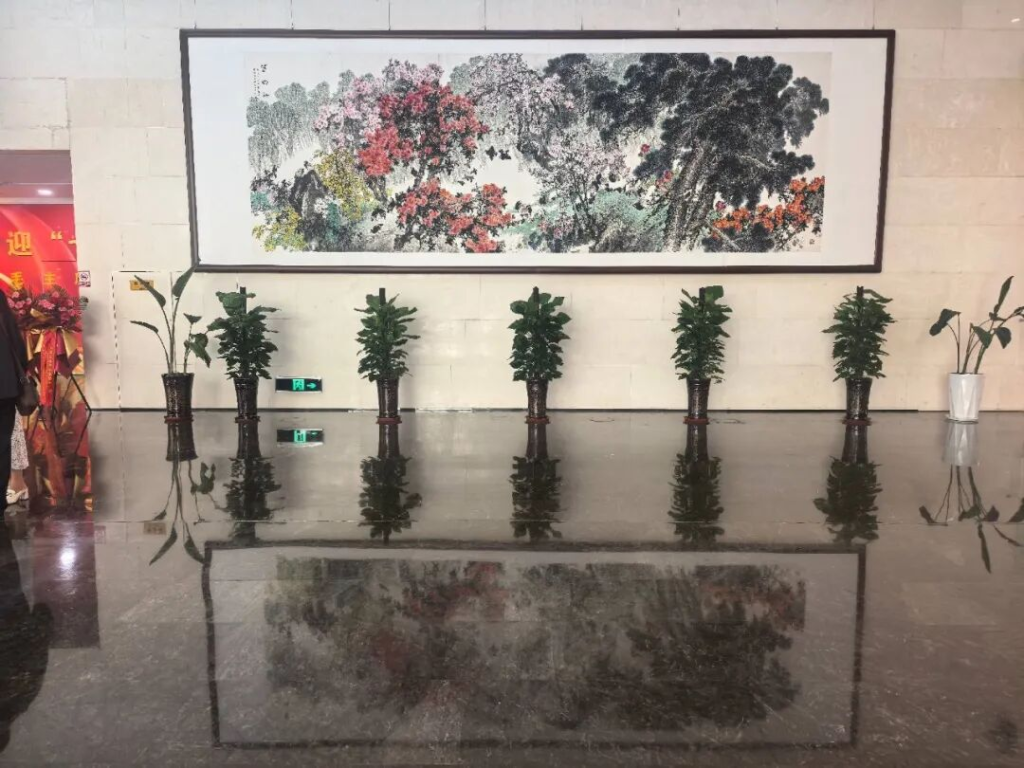
Upon entering the exhibition hall, one is immediately immersed in a century of cultural splendor. Themed “Ink and Brush Composing Glorious Chapters,” this exhibition deeply integrates Comrade Mao Zedong’s poetry with his calligraphic and painting arts, showcasing both his revolutionary grandeur that “devours mountains and rivers” and the enduring spiritual strength of his unwavering original aspirations. From the majestic imagery of Qinyuanchun Snow to the resolute conviction expressed in Seven-Character Regulated Verse · The Long March, each work serves as a spiritual banner, transporting visitors back to an era marked by severe trials yet illuminated by unshakable faith.
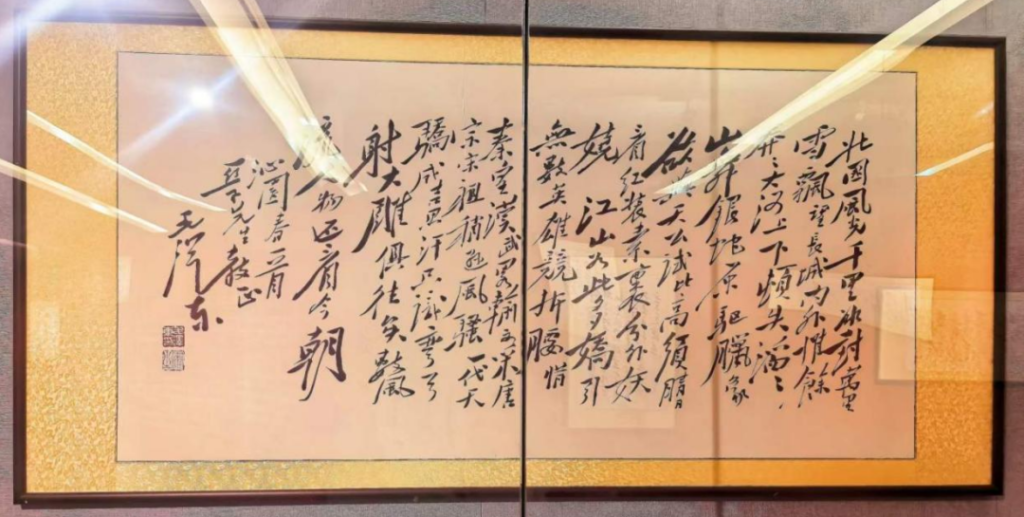
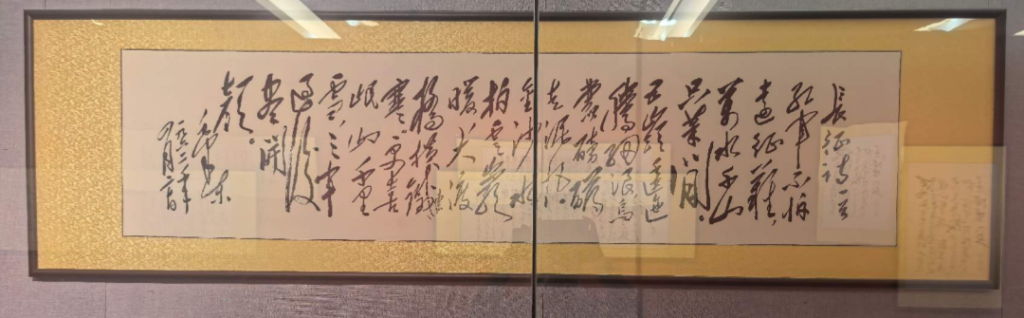
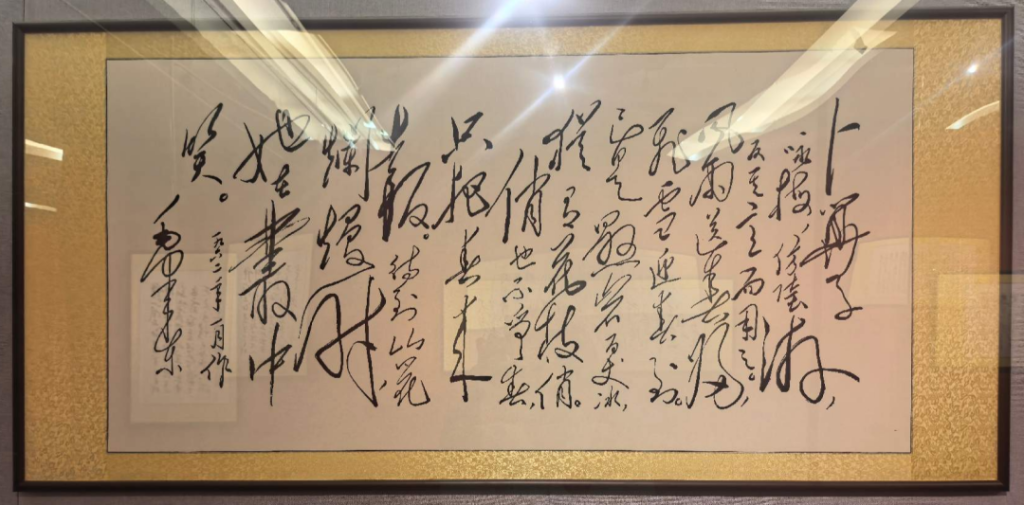
What is most moving about the exhibition is the “mutual resonance” between artistic expression and the revolutionary heritage. Calligraphers convey their lofty aspirations through brushwork-sometimes vigorous and powerful, sometimes graceful and ethereal-materializing the patriotic sentiments and sense of mission depicted in poetry; painters, meanwhile, express their sincerity through painting, using rich colors to portray the grandeur of the revolutionary journey and the fervor of the construction era, thereby breathing new life into these “red classics” within traditional art. Taking the calligraphic work “Bu Suan Zi: Ode to Plum Blossoms” as an example, amidst intricate brushstrokes, the plum blossoms’ defiant posture against snow and frost comes vividly to life on the paper, perfectly complementing the poetic imagery of “even when ice covers a hundred feet of cliff, the flower branches remain graceful.” This not only showcases the resilience of revolutionaries but also conveys the optimistic spirit encapsulated in the line “When mountain flowers bloom in full splendor, she smiles among them,” evoking profound emotion.
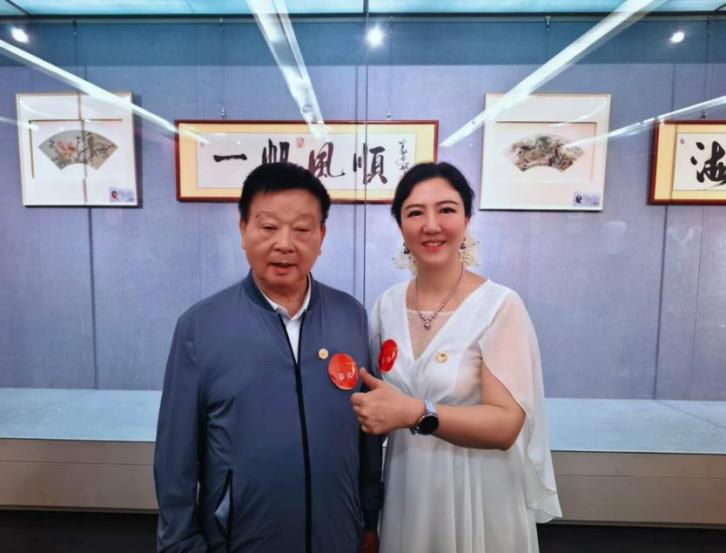
Mr.Wu Liandeng, who served as Chairman Mao’s personal attendant for twelve years, shared his thoughtful approach: he skillfully balanced the “inheritance and innovation” of China’s revolutionary cultural heritage in this exhibition.
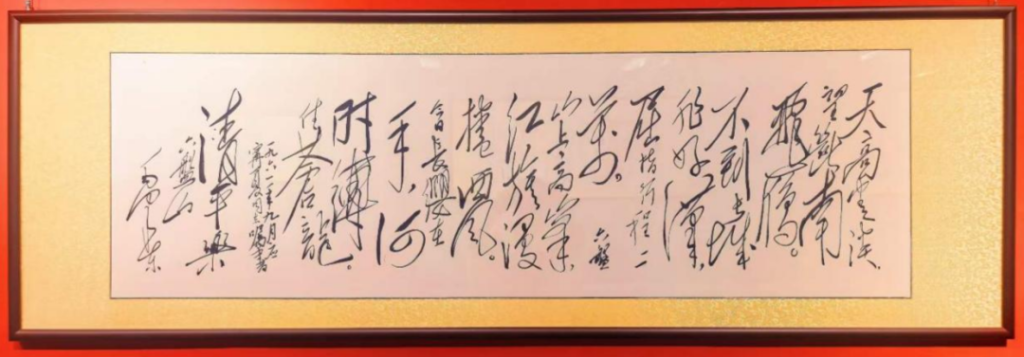
On one hand, the works in this exhibition strictly adhere to the artistic standards of traditional calligraphy and painting, demonstrating exquisite brushwork techniques that reflect a profound reverence for classical traditions; on the other hand, through the collaborative presentation format combining poetry with calligraphy and painting, red culture is conveyed to visitors in a more multidimensional and vivid manner-particularly appealing to younger generations, where this “art + history” approach proves particularly engaging. In the exhibition hall, many visitors pause before the calligraphic work “Qingping Yue · Liupan Shangxia” to recite it softly, while children, guided by their parents, identify revolutionary scenes depicted in the artwork. This immersive viewing experience serves as a vivid illustration of how red culture comes to life.
Mao Zedong’s poetry stands as a spiritual monument etched into the history of China’s revolution, construction, and development, while calligraphy and painting represent a brilliant treasure of China’s excellent traditional culture. The integration of these two elements not only serves as a heartfelt tribute to the Party’s founding anniversary but also embodies the continuous inheritance of revolutionary spirit. As stated in the exhibition preface: “Every character carries the lofty aspirations of our predecessors for national salvation and strength, and every sentence embodies the profound patriotism of Communist Party members.” This spiritual power remains profoundly enlightening for us today – whether in corporate development or personal endeavors, we must uphold the principle of “staying true to our original aspiration and keeping our mission firmly in mind,” and more importantly, demonstrate the courage to “make the sun and moon usher in a new era.”
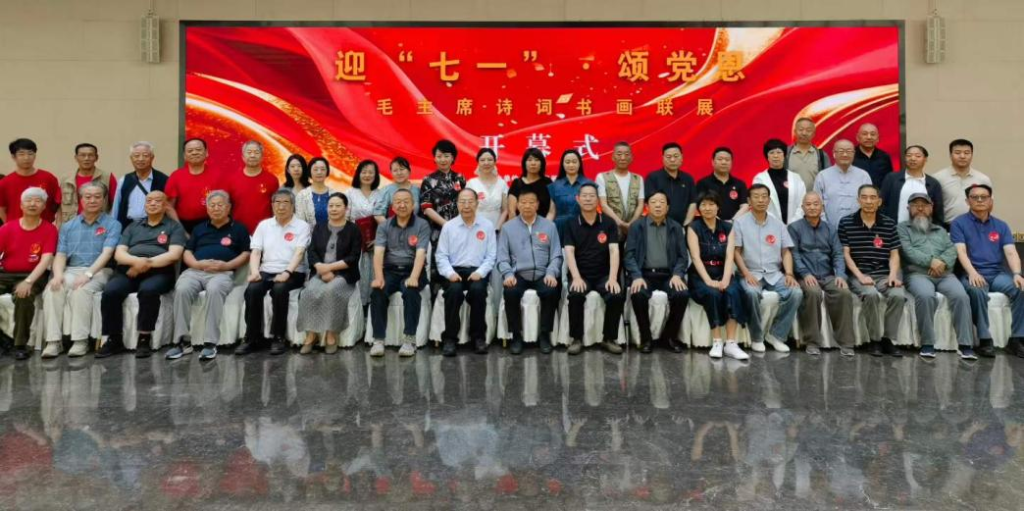
This exhibition will run until around July 1st, and we sincerely invite friends from all walks of life to visit the Taiyuan Art Museum to revisit revolutionary memories through artistic expressions and draw inspiration for progress. Silk Road Star will continue leveraging culture as a bridge to preserve the red legacy, fulfill social responsibilities, and contribute to the creative transformation and innovative development of China’s outstanding traditional culture.